Why do I believe a vegan diet is safe?
Because there are
- Enough trustworthy institutions say it’s safe (eg major hospital, universities, US government, credible doctors)
- A number of top performing athletes doing this
- A large number of papers addressing all the detailed topics that caused concern
- Large population studies which show that it’s not just safe, but one of the best in terms of longevity
Support of plant based diet from credible sourcesEpidemiology researchPotential concerns on nutrition deficiencyAddressing nutritional concernsSpecific topicsSoy milkVegetarian/vegan diet for childrenConcerns on proteinIssues with cow milkCalcium and bonesPrevent deficiencies
Support of plant based diet from credible sources
Kaiser Permanente, one of the largest hospitals in the US, is promoting plant based diet.
Healthy eating may be best achieved with a plant-based diet, which we define as a regimen that encourages whole, plant-based foods and discourages meats, dairy products, and eggs as well as all refined and processed foods.
Physicians should consider recommending a plant-based diet to all their patients, especially those with high blood pressure, diabetes, cardiovascular disease, or obesity.
Paper published by Kaiser:
Kaiser booklet:
American Dietetic Association's position:
It is the position of the American Dietetic Association that appropriately planned vegetarian diets, including total vegetarian or vegan diets, are healthful, nutritionally adequate, and may provide health benefits in the prevention and treatment of certain diseases. Well-planned vegetarian diets are appropriate for individuals during all stages of the life cycle, including pregnancy, lactation, infancy, childhood, and adolescence, and for athletes.
American Heart Association article
Whether you’re considering eating less meat or giving it up entirely, the benefits are clear: less risk of disease and improved health and well-being. Specifically, less meat decreases the risk of: Heart disease, Stroke, Obesity, High blood pressure, High cholesterol, Type 2 diabetes, Many cancers.
American Cancer Society's guideline
In general, the dietary patterns showing the most health benefits are based mainly on plant foods
Red meat refers to unprocessed meat from mammals, such as beef, veal, pork, lamb, mutton, horse, or goat meat, as well as minced or frozen meat. Processed meat has been transformed through curing, smoking, salting, fermentation or other processes to improve preservation or enhance flavor.
Evidence that red and processed meats increase cancer risk has existed for decades, and many health organizations recommend limiting or avoiding these foods. In 2015, the International Agency for Research on Cancer (IARC) concluded that processed meat is in Group 1 (“carcinogenic [cancer-causing] to humans”) and that red meat is in Group 2A (“probably carcinogenic to humans”), based on evidence for increased risks of colorectal cancer. Recent studies also suggest a possible role of red and/or processed meats in increasing risk of breast cancer and certain forms of prostate cancer, although more research is needed.

Stanford article
Focusing on whole foods from plant sources can reduce body weight, blood pressure and risk of heart disease, cancer and diabetes
Plant-based diets include all nutrients — even protein.

Harvard article
It's clear that following a plant-based diet is associated with a lower risk of heart disease


research supports the idea that plant-based diets, including vegan diets, provide health benefits.
Epidemiology research
Blue Zones study conducted by National Geographic
SEE THAT YOUR DIET IS 95-100 PERCENT PLANT-BASED
Adventist study by Loma Linda University. Loma Linda is one of the blue zones.
Vegetarians had a lower risk of obesity, hypertension, diabetes and death from all causes
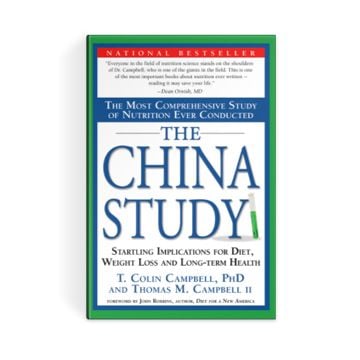
The China study, by researchers from Cornell, Oxford and Chinese Academy of Preventive Medicine
Potential concerns on nutrition deficiency
The nutrients of concern in the diet of vegetarians include vitamin B(12), vitamin D, ω-3 fatty acids, calcium, iron, and zinc. Although a vegetarian diet can meet current recommendations for all of these nutrients, the use of supplements and fortified foods provides a useful shield against deficiency.
Addressing nutritional concerns
Nutritionfacts.org
Harvard article on planning plant based diet
Academy of Nutrition and Dietetics


Specific topics
Soy milk
From Academy of Nutrition and Dietetics
Despite news reports to the contrary, there is no proof soy causes cancer. Actually, there is evidence that consuming soy in childhood and adolescence produces a lower lifetime risk for breast cancer


Numerous studies show it does not increase the risk of cancer, and might even provide protections:
The CKB study demonstrated that moderate soy intake was not associated with breast cancer risk among Chinese women. Higher amount of soy intake might provide reasonable benefits for the prevention of breast cancer.
Clinical trials consistently show that isoflavone intake does not adversely affect markers of breast cancer risk, including mammographic density and cell proliferation. Furthermore, prospective epidemiologic studies involving over 11,000 women from the USA and China show that postdiagnosis soy intake statistically significantly reduces recurrence and improves survival.
We founded that soy isoflavone intake could lower the risk of breast cancer for both pre- and post-menopausal women in Asian countries. However, for women in Western countries, pre- or post-menopausal, there is no evidence to suggest an association between intake of soy isoflavone and breast cancer.
Even studies on babies showed no negative effect:
Vegetarian/vegan diet for children
Academy of Nutrition and Dietics


Research papers:
In spite of this low energy intake, the vegetarian subjects attained normal height but they were leaner
With regard to the physical fitness tests the vegetarian children (Group A) were not different from the population reference values. However, the vegetarian adolescent boys and girls (Group B) and the young adults (Group C) scored on or below the average in standing long jump and 30 sec. sit-up. On the contrary, the vegetarian subjects of Group B (adolescents) and Group C (young adults) performed better in the step test than the reference group. This latter finding suggests that the vegetarian subjects had a better cardiorespiratory endurance capacity.
It is concluded that provided sufficient care is taken, a vegan diet can support normal growth and development.
Conclusions: A Hong Kong Chinese vegetarian diet appears healthy, providing adequate iron and vitamin B12 nutrition, but the prevalence of obesity was high.
The results of this study show that children can be successfully reared on a vegan diet providing sufficient care is taken to avoid the known pitfalls of a bulky diet and vitamin B12 deficiency.
In conclusion, the Vechi Youth Study did not indicate specific nutritional risks among vegetarian and vegan children and adolescents compared to omnivores.
What about the study that showed lower height?
Vegan community interpretation:
- this study is for children aged 5-10. Vegan kids typically grew later, enter adolescence later. So this is expected and reasonable.
- This is backed by other studies on older kids that showed similar height
Concerns on protein
Top vegan athletes
Outspoken vegan athletes:
- Chris Paul: started vegan diet in 2019. Still going strong at the age of 38
- Other vegans in NBA: Cade Cunningham, Kyrie Irving
- Lewis Hamilton: the best in his sport. F1 race is very physically demanding
- Runners: Scott Jurek, Carl Lewis
Proof from everyday people
Youtube vegan fitness influencers
Issues with cow milk
Estrogen
The present data on men and children indicate that estrogens in milk were absorbed, and gonadotropin secretion was suppressed, followed by a decrease in testosterone secretion. Sexual maturation of prepubertal children could be affected by the ordinary intake of cow milk.
Prostate cancer
These data suggest that frequent milk intake in adolescence increases risk of advanced prostate cancer.
Breast cancer
The increase in the annual death rates from breast and ovarian cancers might be due to the lifestyle changes (increased consumption of animal-derived food) that occurred after 1945. Among the food, milk and dairy products should receive particular attention since they contain considerable amounts of estrogens.
No clear associations were found between soy products and breast cancer, independently of dairy. However, higher intakes of dairy calories and dairy milk were associated with hazard ratios (HRs) of 1.22 [95% confidence interval (CI): 1.05-1.40] and 1.50 (95% CI 1.22-1.84)
Calcium and bones

- SOS is not statistically significant
- BUA is 5% lower but not adjusted for bmi
- Longer term vegan gets higher bone density

- resistance training is the most important for bone health
- Study showing dietary calcium intake above 750mg/day doesn’t offer benefit
- Top 5 vegan calcium food: kale, firm tofu, tahini, white bean, broccoli

- in this study, the higher hip fracture rate is only among vegans who are underweight

On bone density: It’s likely due to lower BMI. Resistance training will help too.
Prevent deficiencies
Mic the Vegan
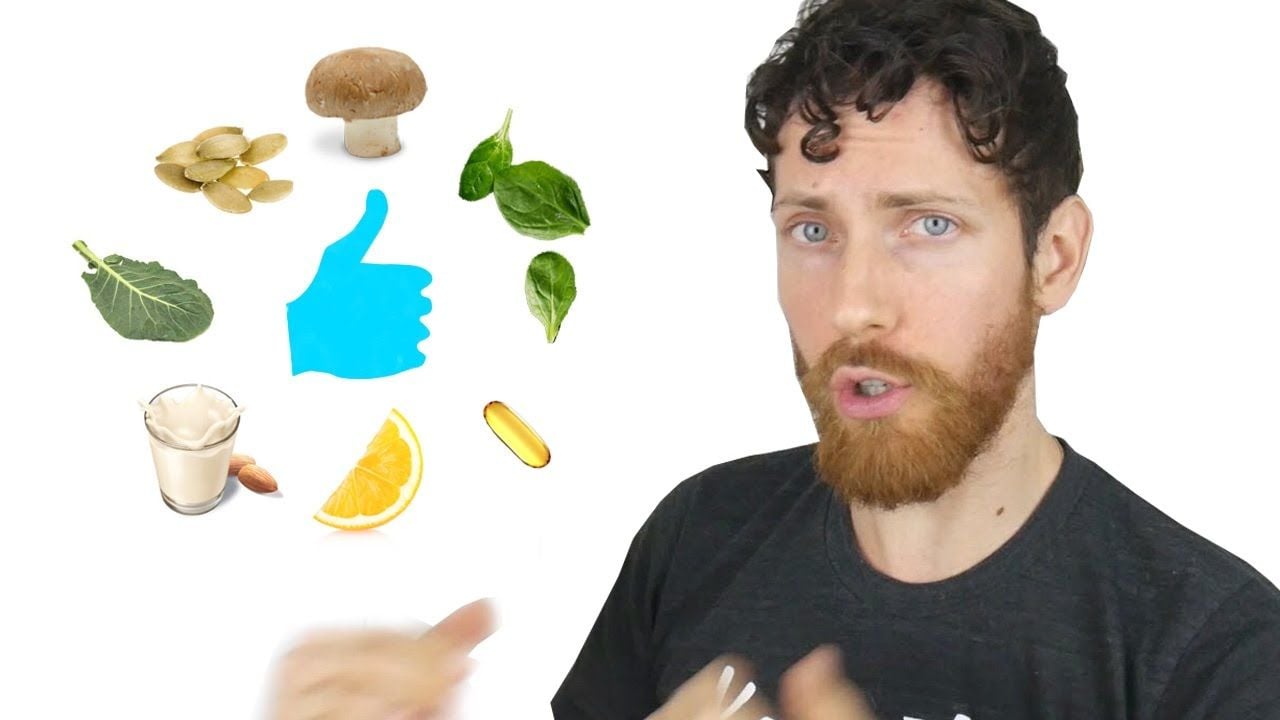
Conclusions:
- eat enough calorie
- Get adequate source of B12 and DHA
- For iron
- Squeeze some lemon on dark leafy greens
- For calcium
- One serving of sesame seeds: 300mg
- A cup of collard greens: 250mg
- One serving of tofu: 250mg
- Vitamin D: mushrooms
- Zinc: some pumpkin seeds
Simon Hill
Recommends essential 8 supplement:


DHA: 180mg
EPA: 90mg
B12: 250mcg
D3: 1000IU
Iron: 12mg
Calcium: 250mg
Selenium: 70mcg
Iodine: 150mcg
Zinc: 12mg
Hippo 7 vegan complete supplement
DHA: 150mg
EPA: 75mg
B12: 24mcg
D3: 1000IU
Iron: 18mg
Calcium: 200mg
Iodine: 150mcg
Zinc: 11mg
Michael Gregor
B12: 2000mcg supplement each week
Vitamin D: sunlight Or 2000IU supplement daily
Calcium: dark leafy green
DHA/EPA: supplement
Iodine: eat seaweed or supplement 150mcg daily
Iron: iron rich food with vitamin C and get checked
Selenium: Northern Europeans should supplement
 Made with Bullet